

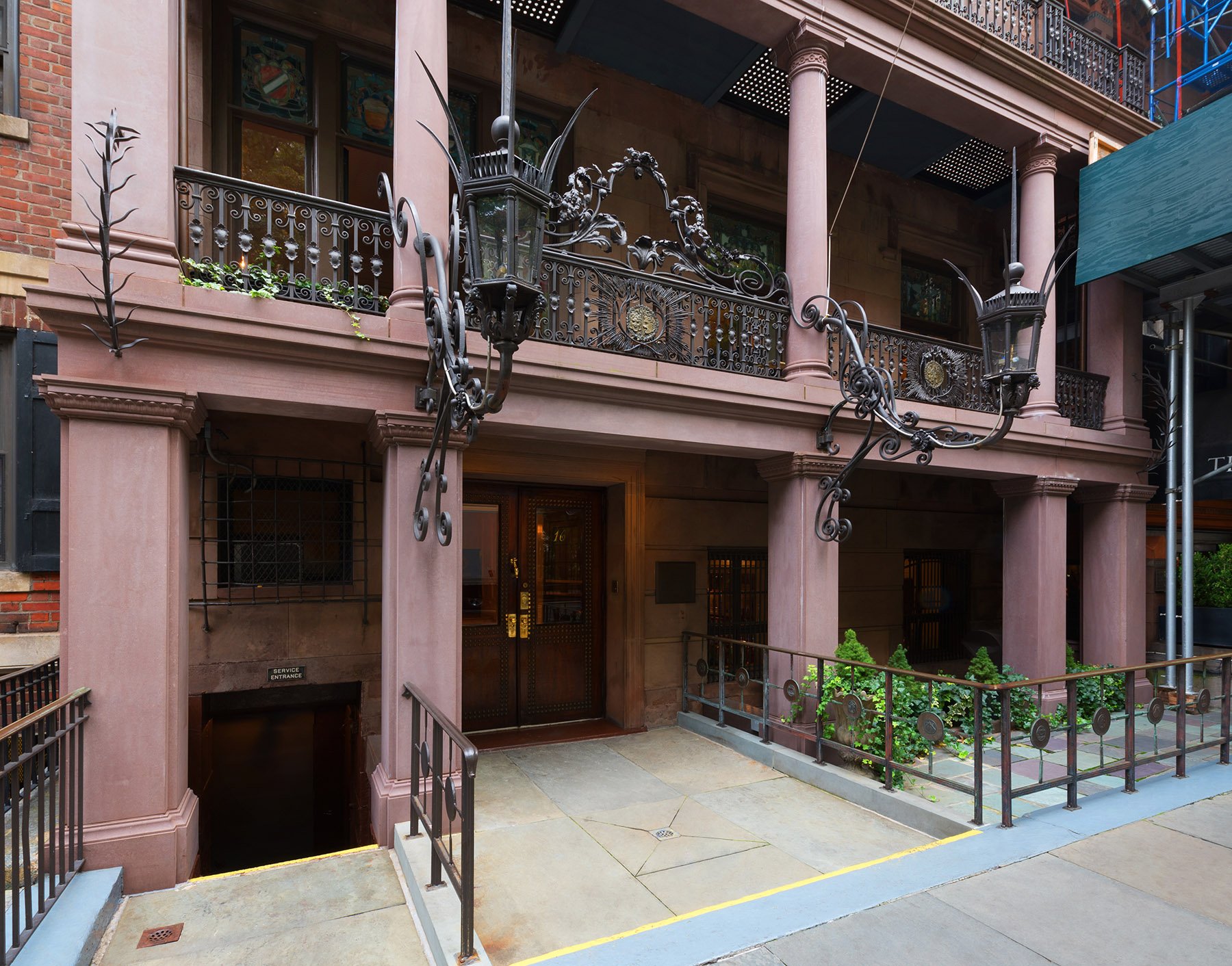
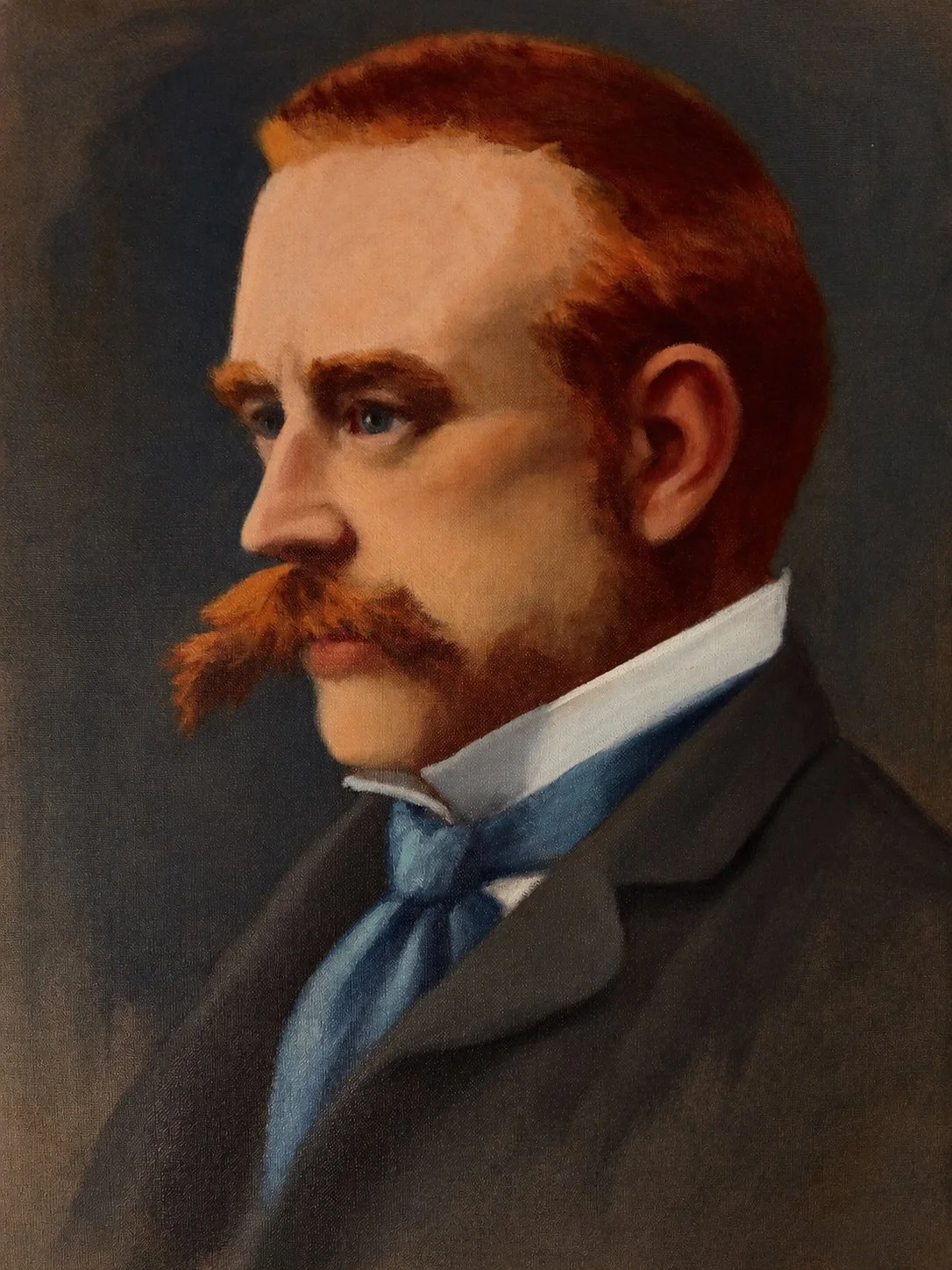
In 1888, the actor Edwin Booth purchased the 1840s townhouse at 16 Gramercy Park South and commissioned his friend, architect Stanford White—the most celebrated architect of the Gilded Age—to transform it. White’s redesigned facade, with its deep portico, paired columns and wrought iron lanterns, is among the finest intact examples of his domestic work.
The entryway gaslights are among the last of their kind still burning anywhere in New York—a living detail of the nineteenth century city.
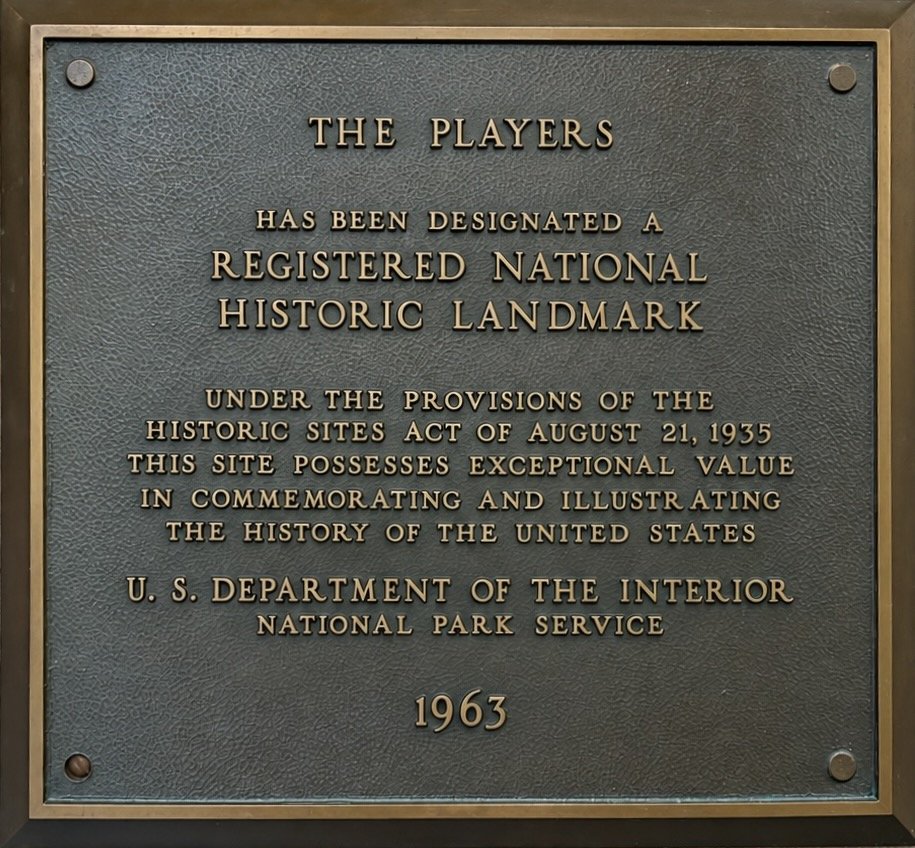
Recognized among the country’s national treasures, 16 Gramercy Park South was awarded the nation’s highest historic designation in 1962. To this day fewer than 2,600 places throughout the U.S. are designated National Historic Landmarks.
Additionally, in 1966, the historic house was named a New York City Landmark, protected under the city’s Landmarks Preservation Law; and designated in the National Register of Historic Places.
The house is also a significant element in the Gramercy Park Historic District.
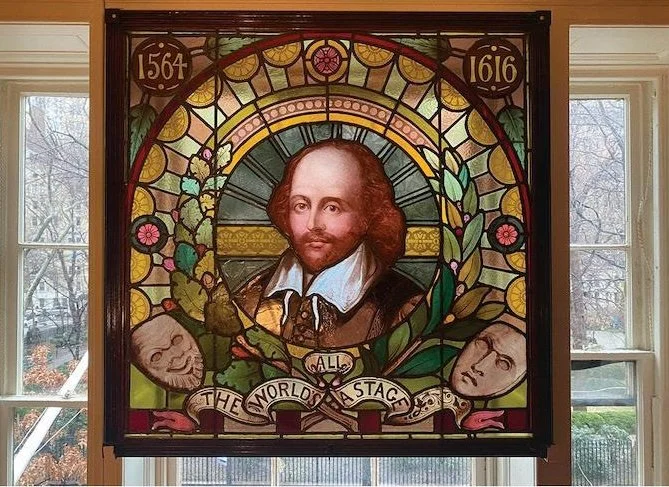
One of the most celebrated American actors of his time, Booth created a place here to celebrate the arts professions and bring artists and other accomplished New Yorkers together into the same social spaces for the first time.
The house is the site where, in 1913, Actors’ Equity Association was founded, forming a union that transformed working conditions and compensation for theatrical performers across the U.S. For over a century since, the historic building has welcomed generations of the country’s leading arts talent.
The Players Preservation Fund is the independent 501(c)(3) organization responsible
for preserving 16 Gramercy Park South’s landmark exterior and essential infrastructure.